OEC Requirements 2026: Complete Guide to the Overseas Employment Certificate
Everything about OEC requirements in 2026 — the transition to the OFW Travel Pass, how to apply, and an honest look at what’s still unclear.
Sourced from official DMW-affiliated Migrant Workers Office pages (Hong Kong, Singapore, Dubai, Germany) and DMW’s own online services documentation, verified July 2026.
If you’re an OFW preparing to leave the Philippines for work, the OEC is the one document standing between you and departure. Here’s what it actually is, a major transition currently underway, and what’s genuinely still unclear about the requirements tied to it.
What the OEC Actually Is
The Overseas Employment Certificate (OEC) is your official exit clearance, issued by the Department of Migrant Workers (DMW) under Republic Act No. 11641 (the Department of Migrant Workers Act), which mandates this exit clearance to ensure OFWs are legally documented and protected. It certifies that your overseas employment is properly registered with the government, and it’s checked by Immigration when you depart.
Presenting a valid OEC exempts you from:
- The Philippine travel tax
- The airport terminal fee (international passenger service charge)
- Reduced travel tax rates also extend to your legitimate spouse and dependents traveling with you
It doesn’t cover other charges like airline baggage fees.
Important nuance, confirmed directly by the Bureau of Immigration: whether you’re asked for an OEC specifically depends on the type of visa you’re traveling on — the BI has clarified that Filipinos traveling abroad on employment visas are the ones required to present a valid OEC, not every departing Filipino regardless of travel purpose.
Important: you don’t need it to return to the Philippines, and it’s not required for continuous overseas employment— it’s specifically checked on your way out of the country.
If you’re a first-time OFW, note that OEC release typically requires two other prerequisites first: completing the Pre-Departure Orientation Seminar (PDOS), and having an active OWWA membership. Without these, your OEC may not be released even if the rest of your documentation is in order.
A Major Change Underway: OEC Is Becoming the “OFW Travel Pass”
This is genuinely current and worth knowing before you rely on older guides: DMW is transitioning the OEC into something called the OFW Travel Pass, issued through the eGovPH app. Here’s the practical difference:
- OEC issued via the older E-Registration portal: valid 60 days from issuance
- OFW Travel Pass issued via eGovPH: valid 90 days from issuance
Both serve the same underlying purpose — exit clearance — but the newer Travel Pass gives you a longer window to actually use it. Both are free. If you’re not sure which system to use, check DMW’s current online services page, since this transition means guidance can vary depending on which system your specific processing center currently directs you to.
Who Needs One
- First-time OFWs (new hires): required before your first departure for overseas work.
- Balik-Manggagawa (returning OFWs): required each time you exit the Philippines to return to overseas work, whether returning to the same employer or a new one.
Each OEC or Travel Pass is valid for one exit only — it doesn’t cover multiple trips.
The Balik-Manggagawa Exemption: A Separate Track
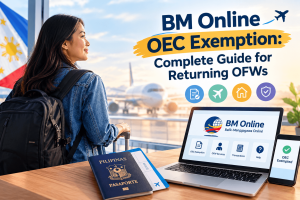
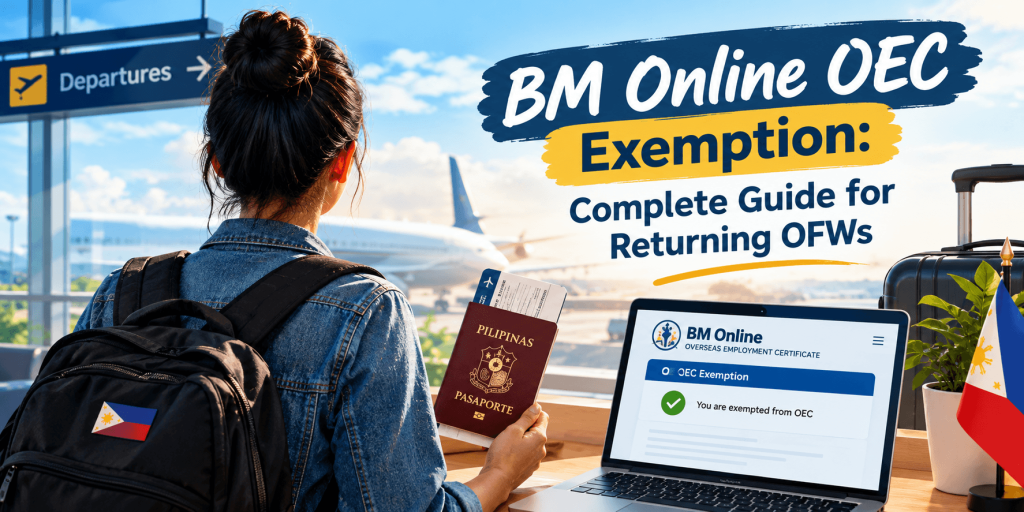
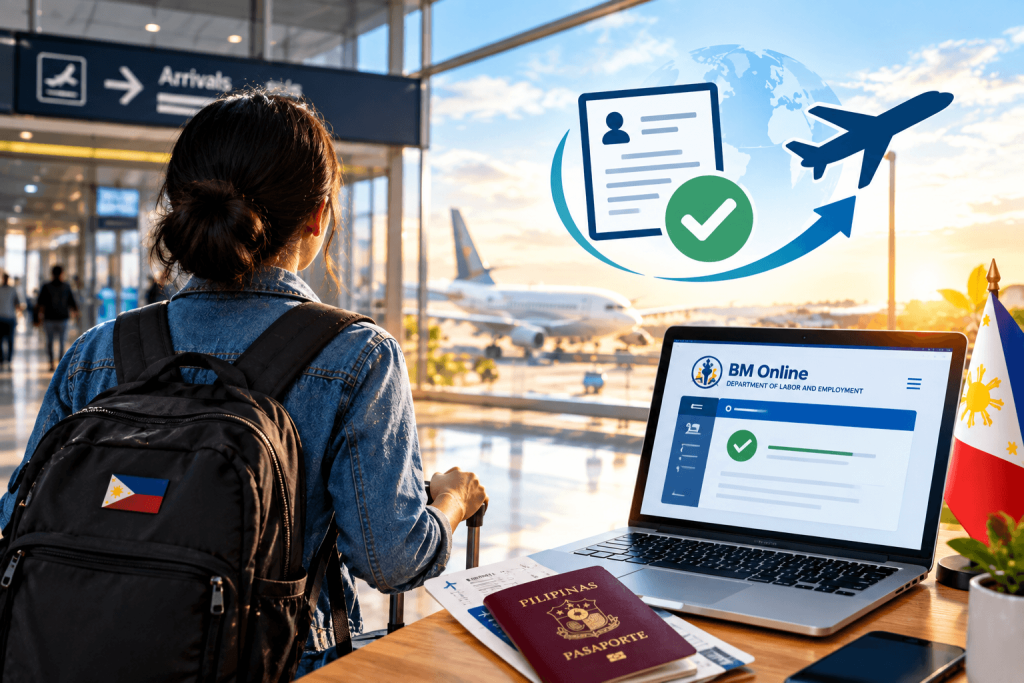
If you’re a returning OFW going back to the same employer and same job site, you may qualify for an OEC Exemptioninstead of a fresh OEC — a faster path that doesn’t require re-processing your full documentation each time. This is handled through the BM Online system, where you log in, enter your last issued OEC number, and the system checks your eligibility for exemption rather than requiring a new full application.
If exempted, your data is transmitted electronically to the Bureau of Immigration, which uses this to validate your exemption status directly at the airport.
What Happens If You Try to Leave Without a Valid OEC
The Bureau of Immigration can prevent you from boarding if you can’t present a valid OEC when required — the common term is “offloading,” though the more formal term is deferred departure. This means you’re simply not cleared for that specific flight; it can happen even with a valid visa and ticket, since Philippine exit clearance is a separate check from your destination country’s entry requirements. If your record is incomplete or flagged as questionable, you may be referred for further validation, which can cost you the flight if it isn’t resolved before boarding closes.
One more thing worth flagging honestly: the ongoing transition from the old POEA system to the consolidated DMW e-Registration System and OFW Pass has created real technical friction for some returning workers.Reported issues include duplicate profiles, name mismatches (e.g., maiden name vs. married name), and unrecorded passport renewals that can block your exit clearance from generating properly. If you’re a returning OFW and your account seems to have issues, it’s worth checking these specific points well before your departure date, not the day of your flight.
Also Required: eTravel
The OFW Pass doesn’t replace eTravel, the general departure/arrival registration required of every passenger, OFW or not. Complete your eTravel declaration separately and carry that QR code alongside your OFW Pass — they’re two different requirements, and having one doesn’t substitute for the other.
How to Apply: Two Methods
Method 1: DMW Online Services / BM Online (E-Registration)
- Go to the official DMW online services portal.
- Register with your personal email if you’re a new user, or log in if you already have an account.
- Enter your last issued OEC number (if you have one) — if no record is found, you may need to set an online appointment instead.
- Update your personal data, contract particulars, and beneficiaries as needed.
- Select “Acquire OEC or Exemption” and complete the online assessment.
- Enter your flight date and confirm whether you’re returning to the same employer.
Method 2: eGovPH App or DMW Mobile App
- Download the DMW Mobile App or eGovPH app.
- Register using your active email address and verify via the OTP sent to you.
- Create a password and complete your profile.
- Accept the Data Privacy Policy.
- Upload a clear photo of your passport’s data page — the app may require a selfie or facial recognition match against your passport photo.
- Once approved, access the “Exit Clearance” section to view, print, or show the QR code for your Travel Pass.
The Question We Genuinely Couldn’t Resolve: Does PhilHealth Payment Affect This?
We covered this in detail in our PhilHealth OFW payment guide, and it’s worth repeating here since it’s directly relevant: PhilHealth’s own president publicly stated in 2020 that OFWs are not required to pay premiums before securing an OEC — a policy reversal following presidential directive, after OFW groups protested a premium hike. Some more recent guides describe payment as still being checked in practice, but we could not find an official 2026 circular clearly re-establishing this as a hard requirement.
Notably, none of the official DMW/embassy sources we used for this article’s application process explicitly list SSS, PhilHealth, or Pag-IBIG contribution status as a checked item during OEC or Travel Pass processing. This doesn’t prove it’s never checked in practice at any processing center — but it doesn’t confirm it either. If you’re unsure, ask directly at your specific processing point (POLO, POEA site, or DMW online support) before your departure date, rather than assuming either way based on this or any other guide.
FAQs
60 days for an OEC issued through the older E-Registration portal, or 90 days for an OFW Travel Pass issued through eGovPH.
No, it’s free through official DMW channels.
Yes, for each exit from the Philippines — though if you’re a Balik-Manggagawa returning to the same employer and job site, you may qualify for the faster exemption process instead of a full new application.
Use the “Recover Account” or password reset option on the login page — you’ll need access to your originally registered email.
No — only the Philippine travel tax and terminal fee. Other charges, like airline baggage fees, still apply.
Immigration checks for this at departure — you can be prevented from boarding, commonly called “offloading” (the formal term is deferred departure), so secure this well before your flight date rather than at the last minute.
Yes — completing the Pre-Departure Orientation Seminar (PDOS) and having an active OWWA membership are typically required before your OEC is released, on top of your employment documentation.
Related guides: PhilHealth OFW Payment: How and When to Pay While Working Abroad · Best Ways to Send Money to the Philippines