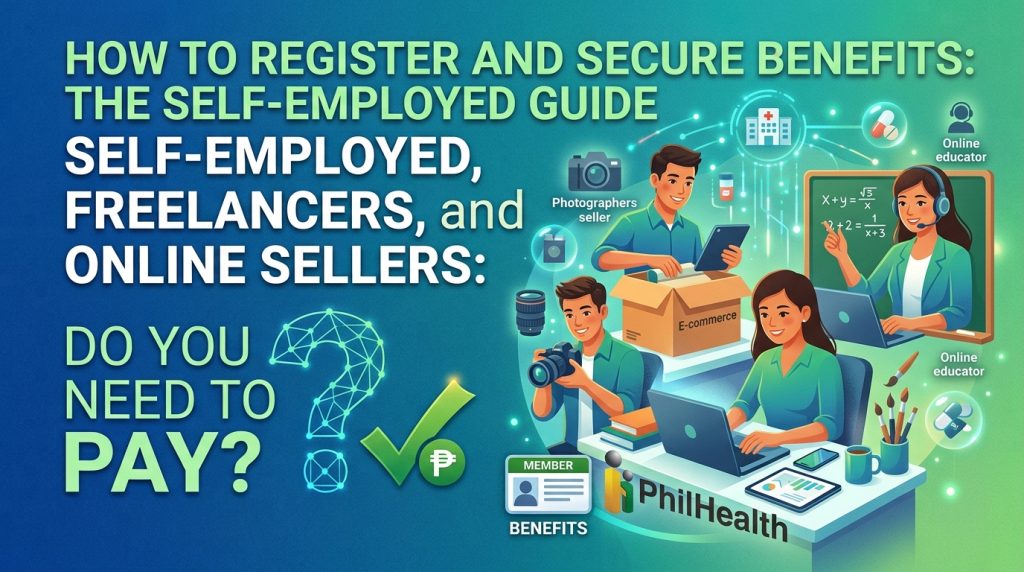
PhilHealth for Self-Employed, Freelancers, and Online Sellers: Do You Need to Pay?
Freelancers, online sellers, and self-employed workers are legally required to have PhilHealth. Here’s how to register, what you’ll pay, and the new SPA payment requirement.

Sourced directly from PhilHealth’s official Advisory 2026-0016, PhilHealth Circular 2026-0011, and cross-checked across multiple independent sources, verified July 2026.
The Short Answer: Yes, It’s Mandatory
If you freelance, sell online, run a small business, or work as an independent professional (doctor, lawyer, engineer, consultant, etc.), PhilHealth coverage isn’t optional — it’s legally required under the Universal Health Care Act (RA 11223), which mandates PhilHealth membership for every Filipino. You fall under the “Self-Earning Individual”category, part of PhilHealth’s broader Direct Contributors group alongside formally employed workers, OFWs, and kasambahay.
This applies whether you’re a full-time freelancer, someone selling on Shopee or Lazada on the side, a tricycle or rideshare driver, or a licensed professional practicing independently.
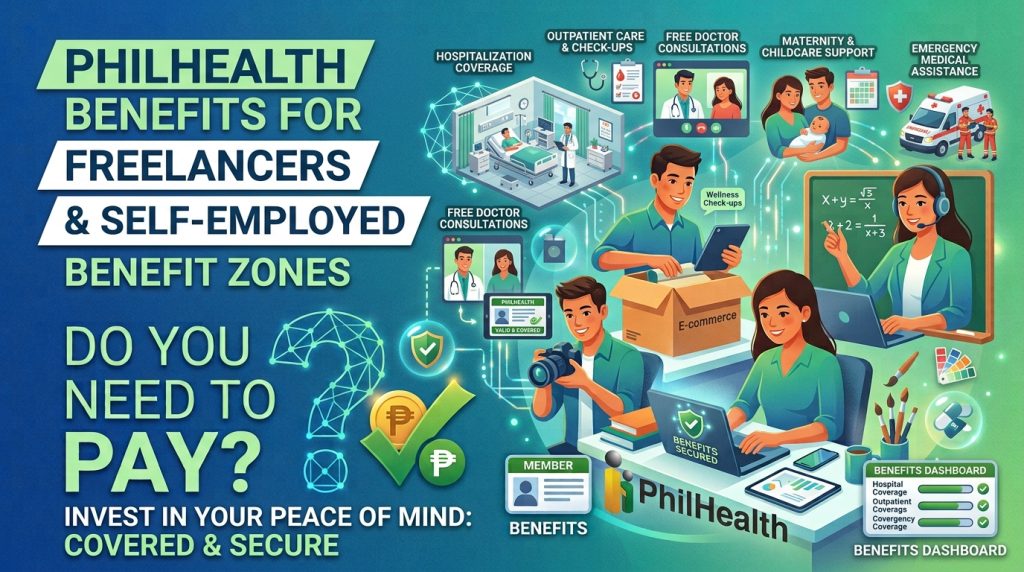
How Much You’ll Pay
Same rate structure as everyone else — 5% of your declared monthly income, within the standard floor and ceiling:
- Minimum: ₱500/month (based on the ₱10,000 income floor)
- Maximum: ₱5,000/month (based on the ₱100,000 income ceiling)
Since you don’t have an employer to split the cost with, you pay the full 5% yourself, based on income you declare — not a fixed government-set amount.
How to Register
Option 1: Online, through PhilHealth’s member portal (memberinquiry.philhealth.gov.ph). You’ll receive your 12-digit PIN by email within 3–5 working days. Note that even after online registration, getting your physical ID card still requires a branch visit for printing and release.
Option 2: In person, at any PhilHealth Local Health Insurance Office (LHIO).
What you’ll need either way:
- Two copies of the completed PMRF (PhilHealth Member Registration Form), marked as new registration
- A valid government-issued ID
- Proof of income — a DTI Certificate, Mayor’s Permit, Income Tax Return, or a notarized affidavit of income if you don’t have formal business documents yet
- A PSA birth certificate (required by some processing routes — bring it to avoid a second trip)
One detail that trips people up: your name on the PMRF must match your PSA birth certificate exactly — even a missing middle initial or a “Jr.” vs. “Jr” discrepancy can cause a “no matching record” error later, especially when a hospital tries to file a claim on your behalf. Double-check this before submitting.
Important 2026 Update: You Now Need an SPA Before You Can Pay
This is a genuinely new requirement most guides haven’t caught up to yet: starting April 1, 2026, PhilHealth implemented a “No SPA, No Payment” policy for all self-paying members (Self-Earning Individuals, Professional Practitioners, and land-based OFWs — sea-based OFWs are excluded).
What this means practically: you can no longer just walk up to a PhilHealth cashier or accredited collecting agent and pay. You must first generate a Statement of Premium Account (SPA) — a QR-coded billing statement showing exactly what you owe and for which period — before any payment will be accepted.
How to generate your SPA:
- Go to spagen.philhealth.gov.ph, or scan the QR codes available on the official PhilHealth website.
- Confirm your membership type is correctly set to a self-paying category (not “Employed”) before generating — if you recently switched from employed to self-employed status, update your membership type first, or the SPA generator may not show the correct option.
- The generated SPA is also sent to your PhilHealth Member Portal account and your declared email.
- Present the SPA (physically or via the QR code) at any PhilHealth LHIO cashier or Accredited Collecting Agent to complete your payment.
One exemption: members paying at Accredited Collecting Agents located in Geographically Isolated and Disadvantaged Areas (GIDAs) are not required to present an SPA.
Security note directly from PhilHealth: don’t share your generated SPA with unauthorized individuals, and only transact with authorized collecting agents.
Payment Deadline
Self-paying members can pay for any number of applicable months at a time, but all premiums for a given calendar year must be fully settled by December 31 of that same year.
What Happens If You Don’t Pay?
Per the actual text of RA 11223 (Section 9), failure to pay premiums doesn’t automatically block you from PhilHealth benefits — but as a self-employed direct contributor, you remain required to pay any missed contributions, plus interest of up to 1.5% per month, compounded monthly (this rate is specific to self-earning individuals, professional practitioners, and migrant workers — employers face a higher 3% monthly rate). In other words, skipping payments doesn’t make the obligation disappear; it compounds.
Worth knowing if you’ve fallen behind: PhilHealth has previously implemented one-time interest waiver programs to help self-employed members and employers settle long-overdue contributions — these waive accumulated interest specifically, not the unpaid principal itself. Check PhilHealth’s current advisories to see if a similar waiver is active, since these programs come and go.
FAQs
I only sell occasionally online — do I really need to register? If you have any regular self-earned income, you legally fall under the Self-Earning Individual category regardless of how “occasional” it feels. There’s no minimum income threshold exempting casual sellers from registration.
Can I skip the SPA requirement if I’m paying at a bank instead of a PhilHealth office? No — the “No SPA, No Payment” policy applies to accredited collecting agents generally, not just PhilHealth offices directly, with the sole exception of GIDA-based agents.
What if I was an employee before and just became self-employed? You need to formally amend your membership type to Self-Earning Individual and declare your monthly income before you can properly register payments — don’t assume your old employed-member status carries over automatically.
Is the PhilHealth requirement different from SSS for self-employed members? No — both SSS and PhilHealth (and Pag-IBIG) separately require self-employed and freelance workers to register and contribute on their own, since none of them have an employer to remit on their behalf. They’re separate obligations, not interchangeable.
Do I need to submit proof of income every year? Requirements can vary by office and circumstances — check with your PhilHealth LHIO directly if your declared income changes significantly, since this can affect your contribution bracket.
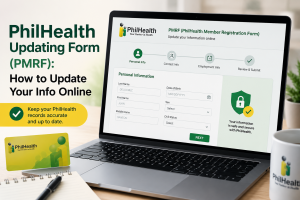
Related guides: PhilHealth Contribution Table 2026: How Much Should Be Deducted · PhilHealth Updating Form (PMRF): How to Update Your Info Online