SSS LoanLite: The New SSS Microloan Through UnionDigital and RCBC (2026)
Sourced from SSS’s own official launch announcement (via Philippine Information Agency and Philippine News Agency) and SSS Circular No. 2026-005 (signed August 4, 2026), cross-checked against multiple independent guides, verified October 2026.
SSS just launched a genuinely new way to borrow a small amount quickly, without the usual employer certification paperwork. Here’s exactly how SSS LoanLite works, who can use it right now, and the one thing SSS itself is actively warning members about.
What Makes This Different From a Regular SSS Loan
LoanLite (officially the SSS Micro Loan Program) is, in SSS’s own words, the first SSS loan facility for employed members that doesn’t require employer certification — the paperwork step that normally slows down a conventional SSS short-term loan. Instead, it’s processed entirely through a participating financial institution’s mobile app, with eligibility checked electronically against your SSS records in real time.
As of mid-October 2026, two participating financial institutions are live: UnionDigital Bank (since September 8, 2026) and RCBC DiskarTech (since October 14, 2026). SSS has described a total of four partner channels, and reports indicate Landbank and UnionBank were still being prepared as of early October. If you don’t bank with one of the live two, you can open an account with either, but check which channel suits you before you start.
Loan Amount, Interest, and Repayment Terms
- Loan amount: ₱1,000 to ₱20,000, based on the average of your 12 latest Monthly Salary Credits
- Interest rate: 8% per annum, roughly 0.67% per month — this follows the same rate structure as an initial SSS Salary Loan
- Repayment term: your choice of 15, 30, 60, or 90 days
- Processing: SSS states eligible applications may be approved within minutes, though this isn’t guaranteed for every applicant and depends on verification
Worked example, from SSS’s own circular: a ₱20,000 loan over a 15-day term is computed as ₱20,000 × 0.67% × (15/30) = ₱67 in interest, deducted from your proceeds along with any other applicable fees.
One important catch: paying early doesn’t reduce what you owe. Early repayment is allowed, but SSS’s terms don’t include an interest rebate — you still pay the interest calculated for the full term you originally chose.
Who Can Qualify — Two Numbers You’ll See, and Why Both Are Real
This is worth explaining properly rather than just picking one number, because both figures genuinely exist in SSS’s own materials, answering two different questions:
SSS Circular No. 2026-005 (the actual governing circular, signed August 4, 2026 by SSS President and CEO Robert Joseph Montes De Claro) sets the baseline eligibility gate at at least 12 posted monthly contributions. Under this circular, having 12, 24, or 36+ contributions doesn’t change whether you qualify — it changes how much you can borrow, since your contribution history and recent Monthly Salary Credits determine your maximum loan amount.
SSS’s own official September 8, 2026 announcement, specifically for the live UnionDigital rollout, states that qualifying members need at least 36 total contributions, with at least 6 posted within the 12 months before applying.This is the figure that was repeated in the official press release covering the actual launch of the service.
In practice, this means: the broader program concept allows for a lower bar (12 contributions), but the specific, currently-live application process through UnionDigital is being described by SSS itself as requiring the stricter 36/6 threshold. Since the UnionDigital app checks your eligibility electronically against your actual SSS record, the most reliable way to know where you stand is to simply attempt the application — but go in expecting the 36/6 standard to apply right now, since that’s what SSS’s own launch announcement for the live service states.
The fuller list of disqualifying conditions, per the circular:
- You must be at least 18 years old, and still under 65 at the end of your chosen loan term
- No past-due Short-Term Member Loan
- No active SSS Micro Loan already outstanding
- No pending or unresolved final benefit claim (unless that claim was already cancelled due to re-employment, resumption of self-employment, or recovery from total disability)
- No active Restructured Loan
- You must have fully paid any prior PFI account that refinanced a previous Micro Loan
- Not disqualified due to fraud committed against SSS
- An account with the participating financial institution (currently, UnionDigital Bank), enrolled in its online facility
Your maximum loan amount is also tied to the Regular SS Program’s Monthly Salary Credit cap — the same ₱20,000 MSC ceiling that applies to the Salary Loan and other SSS benefits — so your actual approved amount may be adjusted based on this, separate from the 12/24/36-contribution tiers.
On OFWs specifically: SSS’s eligibility framework appears to include OFWs in principle, but the circular doesn’t list an OEC or overseas employment contract among the standard required documents — in practice, your bank may still have its own account verification requirements for an overseas-based applicant. If you’re an OFW interested in this, confirm directly with UnionDigital whether their app supports your specific situation before assuming either way.
How to Apply
- Download the official UnionDigital Bank mobile app — only from the official app store listing, not a third-party link.
- Open and verify a UnionDigital account, if you’re not already a customer — this includes the bank’s standard identity verification process.
- Look for the SSS LoanLite option inside the app.
- Enter your SS number to begin the eligibility check — the app verifies your status directly against SSS’s records.
- Choose your loan amount and repayment term (15, 30, 60, or 90 days) from what you’re approved for.
- Review and confirm — once approved, proceeds are credited to your UnionDigital account, with repayment handled via auto-debit.
Renewal: you can apply for another LoanLite once your current one is fully paid off.
Applying Through RCBC DiskarTech Instead
RCBC’s channel works a little differently, per reports on its October 14 launch and RCBC’s own FAQ:
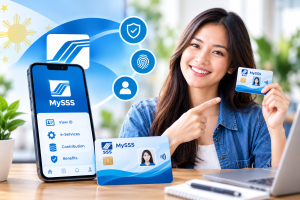
- In My.SSS, apply for a MySSS Card and pick RCBC DiskarTech as your preferred bank. This gives you an SSS Transaction Reference Number (TRN).
- Download the DiskarTech app and register as an SSS member using that TRN.
- Have an RCBC DiskarTech Regular Savings Account, and no past-due SSS Short-Term Member Loan.
- Apply for LoanLite in the app. You don’t need to wait for the physical MySSS Card to arrive.
Reports on the RCBC channel describe loans of ₱1,000 to ₱20,000 over 60 or 90 days (UnionDigital’s channel offers shorter terms too, so compare), with proceeds credited to your DiskarTech account. You can reportedly still apply if you have an existing SSS or RCBC loan, as long as it isn’t past due. For the MySSS Card itself, see our [UMID and MySSS Card guide].
A fee to expect on either channel: coverage of the program reports a partner-bank fee of up to ₱200 per loan, which goes to the bank, not SSS. Confirm the exact amount in the app before accepting a loan.
The Warning SSS Itself Is Issuing
SSS has explicitly advised members to use only the official UnionDigital Bank mobile app when applying, and to avoid any individual or third party offering to “process” a LoanLite application on your behalf. This warning exists for a reason — a genuinely new, digital-first loan product like this is exactly the kind of thing scammers try to exploit early, before most people understand how the real process works. If anyone contacts you offering to “help” you get approved faster for a fee, that’s not an official channel.
FAQs
SSS’s announcement and the program’s framing primarily describe this for employed members, specifically highlighting that it removes the employer-certification step. If you’re self-employed or voluntary, confirm current eligibility directly, since this program is still in its early rollout.
The requirements for a new LoanLite explicitly exclude members with a past-due Short-Term Member Loan or an already-active Micro Loan, meaning falling behind affects your ability to borrow again until it’s resolved.
t’s in the same range as the SSS Salary Loan’s 8% rate for a first-time borrower. The real advantage of LoanLite isn’t a lower rate — it’s the speed and the removal of the employer-certification requirement.
SSS has described four partner channels in total. UnionDigital and RCBC DiskarTech are live; reports indicate Landbank and UnionBank were still being prepared in early October, with no confirmed launch dates.
Having an existing Salary Loan, Calamity Loan, Emergency Loan, or other short-term SSS loan doesn’t automatically disqualify you, as long as it’s current and not past-due. But per the circular, your available LoanLite amount gets capped lower in that case: specifically, it’s limited to the smaller of the normal contribution-based amount, or a separate calculation based on 70% of your total SSS contributions paid, minus your outstanding short-term loan balance. In practice, this means an existing loan can shrink how much LoanLite you’re offered, even if it doesn’t block you outright.
Related guides: SSS Salary Loan: Complete 2026 Guide · How to Choose a Digital Bank in the Philippines